Sourcing Frozen Squid globally in 2026 requires more than comparing prices. Buyers must connect species identity, harvest records, processing controls, and cold-chain performance. The best suppliers can explain where each lot was caught, when it was frozen, and how it was transported. They should also provide clear information about glazing, net weight, packing dates, and storage temperatures.
Seafood safety specialist Dr. Steven Otwell has emphasized, “Quality cannot be added after harvest.” This principle matters when evaluating Frozen Squid from distant markets. A strong supplier should demonstrate rapid freezing, clean processing areas, stable storage at approximately -18°C, and reliable temperature monitoring. Buyers should review certifications, laboratory results, traceability documents, and independent audit findings. A polished website is not enough.
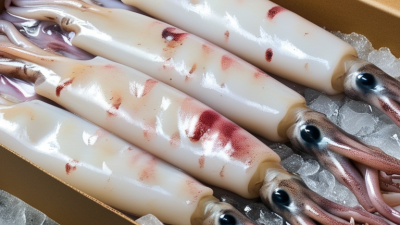
Look closely at the product itself. The squid should have a natural appearance, firm texture, and limited dehydration. Excessive ice may hide low net weight. Broken cartons may signal rough handling. Delayed replies can reveal weak documentation systems. These details are easy to overlook.
No sourcing plan is perfect. Even experienced importers can misjudge seasonal supply, freight delays, or changing demand. A practical approach includes approved backup suppliers and small trial orders before long-term contracts. It also requires regular verification, not blind trust. In 2026, successful Frozen Squid sourcing will depend on evidence, communication, and disciplined cold-chain management. Price still matters. It should never be the only measure.
Sourcing frozen squid globally in 2026 starts with a precise product specification. Define the species, product form, size range, and processing method. Common forms include whole squid, cleaned tubes, tentacles, and rings. State the count per kilogram, not only “large” or “medium.” A practical specification may require 10–20 pieces per kilogram, IQF freezing, and a controlled glaze percentage. Keep the product temperature at or below -18°C throughout storage and transport. Specify acceptable color, odor, texture, broken pieces, and freezer burn. Small details matter.
Grades should reflect measurable quality, not attractive wording. Premium grades usually require uniform sizing, clean appearance, firm texture, low drip loss, and careful trimming. Foodservice buyers may prioritize presentation, while processors often value yield and stable pricing. Ask for harvest area, production date, lot number, processing records, and laboratory results. Testing should address microbiological safety, heavy metals, allergens, and unauthorized additives. Requirements differ across markets, so verify import documents, labeling rules, packaging language, and cold-chain records before signing a contract.
Market demand can change faster than a frozen shipment. Confirm whether buyers need retail packs, bulk cartons, or portion-ready cuts. A clear tolerance for glazing and size variation prevents later disputes. In practice, no specification is perfect. Overly strict limits may increase cost without improving customer value. Loose wording creates quality surprises. Review samples after thawing, not only while frozen. That step is often missed. Suppliers should provide traceable records and respond clearly when results fall outside the agreed range.
In 2026, reliable frozen squid sourcing starts with species and fishing area, not price. The main commercial regions include Peru and Chile for jumbo flying squid, Argentina for Argentine shortfin squid, and China, Japan, India, and Southeast Asia for several loligo species. FAO FishStat data shows that cephalopods remain a major global seafood category, with production concentrated in Asia and South America. Species names matter because texture, size, and thawing loss can differ sharply.
Supplier type should match the purchasing risk. Licensed fishing vessels and producer cooperatives offer stronger origin records, while export processors provide grading, glazing, freezing, and container coordination. Integrated processors may reduce handling, but smaller specialists sometimes provide better species knowledge. Check vessel documentation, catch area, freezing method, glazing percentage, laboratory results, and cold-chain records. UN Comtrade trade data can reveal unusual price gaps or sudden volume changes between exporting and importing markets.
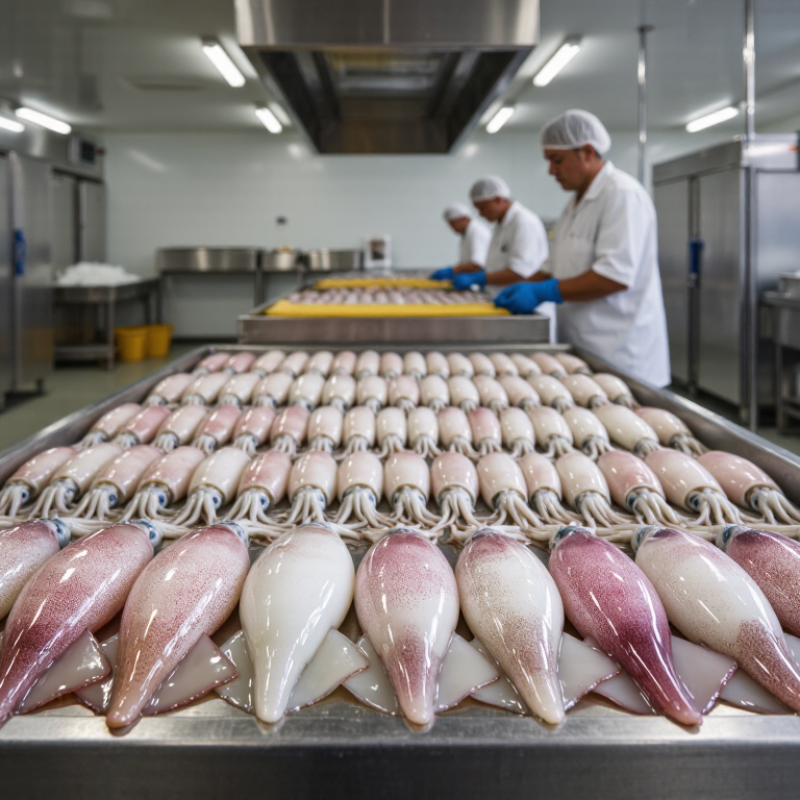
A practical audit includes one factory visit, one retained sample, and one temperature review. Ask for core-temperature records, not only a certificate. Frozen cargo should remain consistently frozen, with packaging free from heavy frost, leaking cartons, or repeated thaw marks. No region is uniformly reliable. Weather, quota changes, port delays, and incomplete traceability can disrupt even established supply routes. FAO’s State of World Fisheries and Aquaculture 2024 also stresses stronger transparency and resilient seafood value chains, although the report is broader than squid. That limitation matters. Data helps narrow the field, but direct verification still decides the supplier.
How to Source Frozen Squid Globally in 2026?
Supplier verification should begin before price discussions. Request the company’s legal registration, processing-site address, export history, and current food-safety certificates. Verify these details through official databases or issuing authorities. Do not rely on scanned documents alone. A polished certificate is not proof.
Ask for species identification, harvest area, production date, lot number, glazing percentage, and storage temperature. Product samples should match the contract description. Check texture, odor, skin condition, and excessive ice during inspection. Independent laboratory testing can confirm microbiological safety, additives, heavy metals, and allergen controls. Keep photographs and signed inspection records. Small details matter.
Cold-chain evidence is equally important. Review temperature logs from processing, loading, transit, and arrival. Frozen squid should remain consistently frozen, not partially thawed and refrozen. Confirm packaging strength, carton labeling, net weight, and traceability codes. Regulatory compliance depends on the destination market, so check import permits, sanitary documents, labeling rules, and catch records where applicable. Ask who handles recalls and rejected lots. Answers should be specific.
Some verification steps may still be incomplete. That is uncomfortable, but useful. Treat unclear records as risks, not minor paperwork gaps. Build a written approval process with independent inspections and periodic supplier reviews. Global sourcing rewards patience more than attractive quotations.
| Evaluation Dimension | Global Verification Data | Evidence to Request | Acceptance Benchmark | Risk Level |
|---|---|---|---|---|
| Supplier Legal Status | The supplier should be legally registered in its country of operation and authorized to handle, process, or export seafood. | Business registration, seafood-processing approval, export authorization, facility address, and official registration number. | Documents are valid, match the trading entity, and remain current through the planned shipment period. | Required |
| Species and Product Identity | Commercial squid may include species such as Illex argentinus, Dosidicus gigas, Nototodarus sloanii, and Loligo vulgaris. Species identity should match the sales contract and label. | Scientific name, common name, production method, country or FAO fishing area, product photographs, specification sheet, and traceability records. | No substitution between squid, cuttlefish, or other cephalopods; species information is consistent across all documents. | Required |
| Fishing Origin and IUU Controls | Wild-caught squid requires credible information about the fishing area, vessel, landing location, and legal authorization. European Union-bound shipments may require an IUU Catch Certificate under Regulation (EC) No. 1005/2008. | Catch certificate where applicable, vessel identification, fishing license, landing records, catch date, fishing area, and chain-of-custody documents. | Origin is verifiable, the vessel and fishing activity are legally documented, and information is consistent with the shipment lot. | Required |
| Cold-Chain Performance | Quick-frozen seafood should generally be maintained at −18°C or colder after thermal stabilization, consistent with the Codex approach for quick-frozen foods. | Freezing records, container temperature logs, data-logger report, loading photographs, storage records, and bill-of-lading temperature instructions. | Product temperature remains at or below −18°C during storage and transport, with no unexplained thawing or refreezing events. | Required |
| Physical Product Quality | Quality factors include intact appearance, natural color, firm texture, limited dehydration, absence of excessive ice crystals, and no foreign materials. | Pre-shipment inspection report, lot photographs, product samples, defect classification, and inspection checklist. | No evidence of freezer burn, severe oxidation, contamination, excessive breakage, or repeated freeze–thaw cycles. | Benchmark |
| Glazing and Net Weight | Glaze is added water that protects frozen seafood from dehydration; it should not conceal inadequate net product weight. | Declared net weight and gross weight, glazing specification, thaw-and-drain test, calibrated scale records, and lot-level inspection results. | Drained net weight complies with the purchase specification and destination labeling rules; glazing percentage is clearly declared where required. | Required |
| Microbiological Safety | Frozen storage does not eliminate all microorganisms. Sampling should address pathogens and hygiene indicators according to the destination market and product use. | Accredited laboratory report, sampling plan, test method, laboratory accreditation status, production date, and lot number. | Results comply with the importing market's applicable microbiological criteria; test reports are traceable to the shipped lot. | Required |
| Chemical and Contaminant Controls | Potential hazards include heavy metals, environmental contaminants, cleaning-chemical residues, and undeclared additives. Limits differ by destination. | Laboratory results for relevant contaminants, additive declaration, water-quality controls, corrective-action records, and risk-based monitoring plan. | Results meet the importing jurisdiction's current maximum levels, including applicable requirements under destination contaminant legislation. | Required |
| Food-Safety Management | Seafood processors should operate documented preventive controls based on HACCP principles, including hazard analysis, critical limits, verification, and corrective actions. | HACCP plan, process flow diagram, monitoring records, sanitation program, pest-control records, internal audit reports, and corrective-action history. | Controls cover receiving, freezing, storage, packing, foreign-material prevention, sanitation, and product release. | Required |
| Traceability and Recall Readiness | Each case or pallet should be linked to a production lot, raw-material source, processing date, storage record, and shipment document. | Lot code format, one-step-back and one-step-forward records, mock-recall result, packing list, and production report. | The supplier can identify affected lots and provide distribution details promptly during a recall simulation. | Required |
| United States Import Route | Seafood imports generally require compliance with applicable U.S. seafood HACCP requirements under 21 CFR Part 123. Importers also have Foreign Supplier Verification Program responsibilities under the Food Safety Modernization Act. | HACCP documentation, foreign-facility details, supplier hazard analysis, verification records, entry documents, and prior-notice information where applicable. | Importer and supplier responsibilities are assigned before shipment, and records demonstrate preventive-control verification. | Required |
| European Union Import Route | Key controls may include approved establishment requirements, official import controls, food-hygiene rules, traceability, contaminant limits, labeling rules, and IUU documentation for wild-caught products. | Approved-establishment details, health or official certificates where applicable, catch certificate, commercial invoice, packing list, transport records, and traceability file. | All documents use matching product descriptions, lot numbers, origin information, weights, and consignee details. | Required |
| Japan and Other Asian Import Routes | Import notification, food-sanitation documentation, labeling, residue controls, and destination-specific testing may apply. Requirements vary by product form and port of entry. | Import notification data, health certificate where applicable, product specification, laboratory reports, Japanese or local-language label review, and customs documents. | Requirements are confirmed with the importer and competent authority before production and before vessel departure. | Recommended |
| Label and Packaging Compliance | Typical information includes product name, species, net weight, lot code, production or best-before date, storage condition, country of origin, production method, and importer details where required. | Final artwork, carton specification, inner-pack label, pallet label, translation review, and destination-market checklist. | Printed information matches the approved specification, commercial documents, and applicable destination labeling rules. | Required |
| Supplier Audit and Sampling Plan | Document review alone is insufficient for high-risk seafood purchases. A risk-based audit and pre-shipment inspection help verify actual operating conditions. | Remote or on-site audit report, corrective-action plan, product sample, third-party inspection report, and retained-sample procedure. | Critical nonconformities are closed before shipment; sampling frequency is increased for new suppliers or poor historical performance. | Benchmark |
| Commercial and Logistics Resilience | Frozen squid supply can be affected by seasonal availability, fishing restrictions, port congestion, reefer capacity, and changes in fuel or freight costs. | Seasonality calendar, production capacity, cold-storage capacity, shipment history, alternative loading ports, insurance documents, and contingency plan. | Supplier can explain seasonal constraints and provide a documented response plan for delays, rejected lots, or temperature excursions. | Recommended |

Global squid sourcing requires more than comparing the lowest offer. FAO’s The State of World Fisheries and Aquaculture 2024 valued global aquatic-product trade at about US$195 billion in 2022. However, squid prices vary sharply by species, size count, processing style, glazing, and catch season. Request a product specification sheet before negotiating. A 10% glaze can reduce the real edible weight.
Compare offers under identical Incoterms. FOB prices may appear attractive, yet they exclude ocean freight, insurance, and destination handling. CIF includes freight to the named port, but import duties, customs clearance, inspections, storage, and inland delivery remain payable.
UNCTAD’s Review of Maritime Transport 2024 highlights continuing freight volatility. Therefore, calculate landed cost using recent reefer quotations, not last season’s spreadsheet.
Tips: Ask for three freight scenarios. Check temperature records from loading to delivery. Frozen squid should normally remain at -18°C or colder. Review the bill of lading, health certificate, catch documentation, carton labels, and laboratory results. Also confirm demurrage terms before arrival. FAO guidance supports traceability and temperature control across seafood supply chains. One overlooked inspection delay can erase a small purchase saving.
My practical warning is simple: quoted prices are often precise, but final import costs are not. Build a contingency allowance, then question it again.
How to Source Frozen Squid Globally in 2026?
A reliable frozen squid program begins with a contract, not a price quote. Define species, origin, size count, glazing percentage, net weight, packing date, temperature limits, and rejection rights. The FAO reported 185.4 million tonnes of aquatic animal production in 2022, with aquaculture exceeding capture fisheries for the first time. This scale increases choice, but it also increases traceability risk. Reference FAO’s The State of World Fisheries and Aquaculture 2024 and require catch documents, vessel details, health certificates, and laboratory results. Use Incoterms 2020 carefully. “CIF” does not automatically transfer every customs responsibility. The contract should name the importer of record, required documents, inspection timing, and payment triggers.
Customs classification must be checked in the destination country. Frozen squid commonly falls under HS 0307.43, but national tariff schedules and product descriptions can differ. Ask a licensed broker to confirm duties, quota rules, sanitary controls, and labeling before shipment. For delivery, record container temperature at loading, transshipment, arrival, and unloading. A small temperature gap can become a large quality dispute. According to FAO GLOBEFISH market reporting, cephalopod prices and availability can shift with catches, weather, and freight conditions. Build delivery buffers, not optimistic promises. Supplier audits should review HACCP plans, cold-room calibration, worker hygiene, traceability exercises, and corrective-action closure. Codex General Principles of Food Hygiene remains a practical benchmark. A polished audit report is not proof of daily discipline. Recheck high-risk suppliers quarterly, including unannounced document reviews. Some weaknesses will remain. That is why contracts need evidence, escalation rules, and an exit path.
Manage contracts, customs procedures, delivery controls, and ongoing supplier audits around a consistent frozen-chain baseline.
How to use this benchmark: Specify an internal product temperature of −18°C or colder in the purchase contract, verify temperature records during delivery, and require corrective actions when the cold chain is interrupted. Customs files should include the correct HS classification, commercial invoice, packing list, transport documents, health certificates where required, and traceability records. Supplier audits should review freezing capacity, hygiene controls, calibration records, product specifications, and documentation consistency.
Reference basis: Codex Code of Practice for Fish and Fishery Products (CXC 52-2003); European Commission Regulation (EC) No 853/2004; UK retained food-hygiene rules for frozen fishery products.