Inquiry
Form loading...

7 Tips for Cooking Frozen Squid Rings Perfectly

Cooking Frozen Squid Rings can seem simple, yet small mistakes quickly create a rubbery, watery result. Frozen seafood often releases excess moisture as it thaws. That moisture can prevent proper browning and dilute seasoning. I have learned that preparation matters as much as cooking time. A crowded pan rarely delivers tender squid.

This guide presents seven practical tips for handling frozen squid rings with greater confidence. It covers safe thawing, thorough draining, careful seasoning, and choosing the right heat. Timing matters. Squid usually needs either a very short cooking period or a longer, gentle braise. The middle ground can be unpleasantly chewy.

Texture tells an important story.

A hot pan should sizzle when the rings touch its surface. Paper towels can remove the moisture that causes steaming. A kitchen thermometer also supports reliable food safety decisions. Many food-safety authorities recommend cooking seafood to 145°F (63°C). However, temperature alone does not guarantee a delicate texture. Overcooking can happen quickly, especially with thin rings.

Even experienced cooks sometimes misjudge the pan temperature. I still occasionally leave a few rings too long while checking the seasoning. That small delay matters. These tips focus on repeatable techniques, visible cues, and realistic home-kitchen conditions. They also explain when a shortcut may fail, so the method remains useful rather than idealized. With better control of moisture, heat, and timing, frozen squid rings can become tender, flavorful, and pleasantly springy.
7 Tips for Cooking Frozen Squid Rings Perfectly

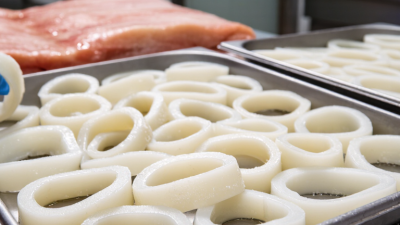
Selecting and Thawing Frozen Squid Rings Safely

Selecting and Thawing Frozen Squid Rings Safely

Selecting starts before opening the freezer. Choose a sealed bag with clear labeling and intact rings. Avoid heavy ice, leaks, or crushed packaging. The USDA FoodKeeper guidance recommends storing frozen seafood at 0°F (-18°C). Keep the package frozen during shopping. Frost is not proof of spoilage, but thick crystals may signal temperature changes. Check the date, too. My weak point is rushing this inspection when dinner is late.

For safe thawing, transfer only the needed rings to a covered tray. Keep them in a refrigerator at 40°F (4°C) or below. The FDA Food Code 2022 sets cold holding at 41°F (5°C) or below. Allow several hours, never a warm countertop. A faster option uses cold running water at 70°F (21°C) or below, with immediate cooking afterward. Microwave thawing also requires immediate cooking. These are practical controls, not cooking folklore.

Drain the rings and pat them dry before cooking. A dry surface browns better and reduces steaming. If thawed in the refrigerator, refreezing is generally safe, according to USDA guidance, though texture may deteriorate. Discard squid with an ammonia-like odor, sticky flesh, or unusual discoloration. I sometimes over-dry the rings, so timing deserves attention. Seven small checks matter: package, ice, temperature, tray, water, timing, and smell.

7 Tips for Cooking Frozen Squid Rings Perfectly - Selecting and Thawing Frozen Squid Rings Safely
Tip What to Do Recommended Detail Time or Temperature Guide Food-Safety Check
1Select a Good Product Choose frozen squid rings that remain solidly frozen and are sealed in an intact package. Avoid packages with tears, excessive frost, liquid stains, or large ice crystals, which may indicate temperature fluctuations or freezer burn. Keep the product at 0°F (-18°C) or below until thawing. Do not buy seafood that smells strongly sour, ammonia-like, or unpleasant after opening.
2Thaw in the Refrigerator Place the sealed package in a shallow dish on the lowest refrigerator shelf. This method keeps the squid cold while allowing it to thaw gradually and helps prevent drips onto other foods. Allow approximately 8–24 hours, depending on package thickness and quantity. Maintain the refrigerator at 40°F (4°C) or below.
3Use Cold Water When Needed Put the squid in a leak-proof bag and submerge it in cold tap water. Change the water every 30 minutes. Cold-water thawing is faster than refrigerator thawing but requires active monitoring. A small package often thaws in about 30–60 minutes; larger quantities may take longer. Cook the squid immediately after cold-water thawing. Never use warm or hot water.
4Drain and Dry Thoroughly Drain the thawed rings in a colander and pat them dry with paper towels before seasoning or cooking. Removing surface moisture reduces splattering and improves browning during sautéing, grilling, or frying. Dry for approximately 2–5 minutes after draining. Keep raw squid separate from ready-to-eat foods, cutting boards, and utensils.
5Choose a Short or Long Cooking Method Cook squid very quickly over high heat, or cook it slowly in a moist dish. Avoid the middle range when possible. Short cooking helps retain tenderness; prolonged braising can also tenderize squid after it becomes firm. Quick methods commonly take about 1–3 minutes; slow methods may take about 30–45 minutes. Cooking time varies with ring thickness, quantity, and equipment, so check the center rather than relying only on the clock.
6Cook to a Safe Internal Temperature Use a food thermometer when practical, inserting it into the thickest part of the squid. Squid should become opaque and firm, but it should not be judged by color alone. Cook to at least 145°F (63°C). Clean and sanitize the thermometer between raw and cooked foods.
7Serve Promptly and Store Correctly Serve cooked squid soon after cooking and refrigerate leftovers in a shallow, covered container. Divide large amounts into shallow containers so they cool more quickly and evenly. Refrigerate within 2 hours, or within 1 hour when the surrounding temperature is above 90°F (32°C). Use refrigerated leftovers within 3–4 days; discard food left out longer than the recommended limit.

Removing Excess Moisture Before Cooking

Frozen squid rings can cook beautifully, but excess moisture is their quiet enemy. Water cools the pan, encourages steaming, and leaves the rings pale or rubbery. I learned this after serving a watery batch beside crisp vegetables. It looked fine at first. It was not.

Empty the frozen rings into a colander and rinse away loose ice under cold running water. Let them drain for several minutes. Then spread them across a clean towel and press gently with another towel. Do not twist or squeeze them hard, because delicate flesh can tear. Use a second dry towel if the first one feels damp. That small step matters.

Before seasoning, check the surface with your fingertips. It should feel cool and slightly tacky, never slippery. Cook in small batches over high heat, leaving space between pieces. Crowding releases steam and brings the moisture problem back. I sometimes season too early, and the salt draws out more liquid than expected. Waiting until the rings are nearly dry works better in my kitchen, although timing depends on their thickness. Watch closely, because squid can turn from tender to chewy within minutes.

7 Tips for Cooking Frozen Squid Rings Perfectly

Recommended time targets for removing excess moisture and keeping squid tender.

Thaw squid safely in the refrigerator or in cold water, then drain and pat the rings thoroughly with paper towels. A short air-drying period and a fully preheated pan help reduce steaming. Cook in small batches for about 2–3 minutes, until the squid is opaque and firm.

Time values are practical kitchen targets; refrigerator thawing time varies with package size and ring thickness.

Choosing the Best Cooking Method for Tender Squid

Choosing the Best Cooking Method for Tender Squid

Frozen squid rings can become tender, but the cooking method matters more than fancy seasoning. Remove excess ice, then thaw them in the refrigerator overnight. For faster thawing, seal the rings and place them in cold water. Pat them completely dry before cooking.

High-heat methods suit thin rings. Stir-frying takes about one to two minutes, with a hot pan and quick movement. Grilling works well when the rings are dry and lightly oiled. Cook them briefly until they turn opaque and curl slightly.

For softer results, poach the rings gently in barely simmering water for 30 to 60 seconds. Steaming is another reliable choice, especially when adding ginger, lemon, or herbs.

Keep the heat high.

Deep-frying creates a crisp coating, but the squid still needs minimal cooking. A short fry prevents a chewy center. Slow braising can also work, yet it requires enough liquid and time to soften the muscle fibers. Avoid placing frozen rings directly into a crowded pan. They release water and steam instead of searing. I once ignored this detail and served pale, rubbery squid. It was edible, but not my best result. Check one ring before removing the whole batch. Its center should look opaque, moist, and tender, never translucent or dry.

Controlling Cooking Time and Temperature

7 Tips for Cooking Frozen Squid Rings Perfectly

Controlling Cooking Time and Temperature

Frozen squid rings need controlled heat, not guesswork. Thaw them overnight in a refrigerator, then drain and pat them completely dry. Surface water lowers pan temperature and creates steaming instead of browning. The 2022 FDA Food Code recommends cooking fish and similar seafood to 145°F (63°C) for 15 seconds. Use a probe thermometer when ring thickness varies.

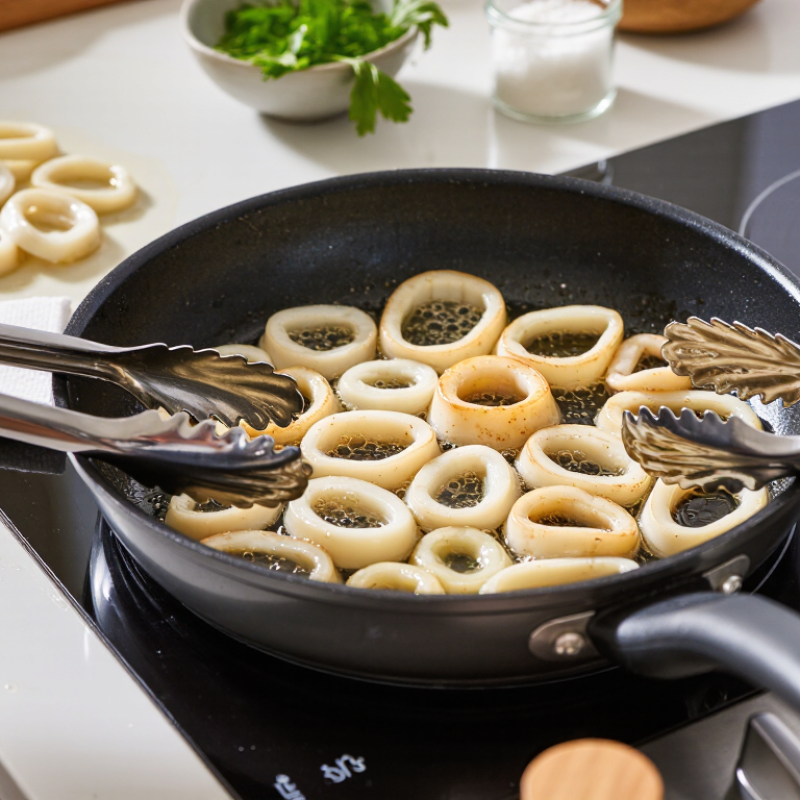
For a hot-pan method, preheat the pan until a water drop sizzles sharply. Add a small amount of oil, then cook rings for about 60–90 seconds per side. Thin rings may need less time. They should turn opaque, curl lightly, and remain springy. Too much crowding changes the result quickly. Cook in batches.

For a tender braise, use the opposite timing strategy. Simmer squid gently for 30–45 minutes after adding enough liquid to cover it. The exact time depends on ring size and thawing. The seafood industry commonly describes squid as tender when cooked either very briefly or much longer; the middle range often becomes chewy. I still check texture rather than trusting a timer alone. That habit has saved several disappointing batches. Research from NOAA Fisheries also identifies squid as a lean, protein-rich seafood, so it can dry out when overheated. Let cooked rings rest briefly before serving, while their centers finish equalizing.

Seasoning, Serving, and Storing Cooked Squid Rings

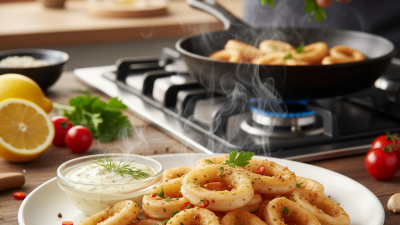
Frozen squid rings cook best when their surface is dry. Thaw them overnight in the refrigerator, then pat them thoroughly with paper towels. A wet ring steams instead of searing. I season lightly with salt, black pepper, lemon zest, and crushed garlic. Add delicate herbs after cooking, because high heat quickly dulls their aroma.

Heat a skillet until a drop of water sizzles. Cook the rings in one layer for about 60–90 seconds per side. The FDA Food Code 2022 lists 145°F (63°C) for 15 seconds as a safe seafood cooking standard. Use a thermometer when possible, although thin rings can be difficult to measure accurately. They should look opaque, curl slightly, and remain springy. I sometimes leave them on the heat too long. That mistake turns a tender bite rubbery. Serve immediately with warm rice, crisp salad, or toasted bread. A little acid brightens the finished dish.

For storage, cool cooked rings promptly and place them in a shallow, sealed container. USDA FoodKeeper guidance recommends using refrigerated leftovers within three to four days at 40°F (4°C) or below. Do not leave seafood at room temperature for over two hours, or one hour above 90°F (32°C). Reheat gently to 165°F (74°C), preferably in a covered pan with a spoonful of water. Microwaving can make squid tough, so short intervals work better. The texture may still decline. That is worth acknowledging.